Andromeda Galaxy (M31) – 29-Minute Exposure
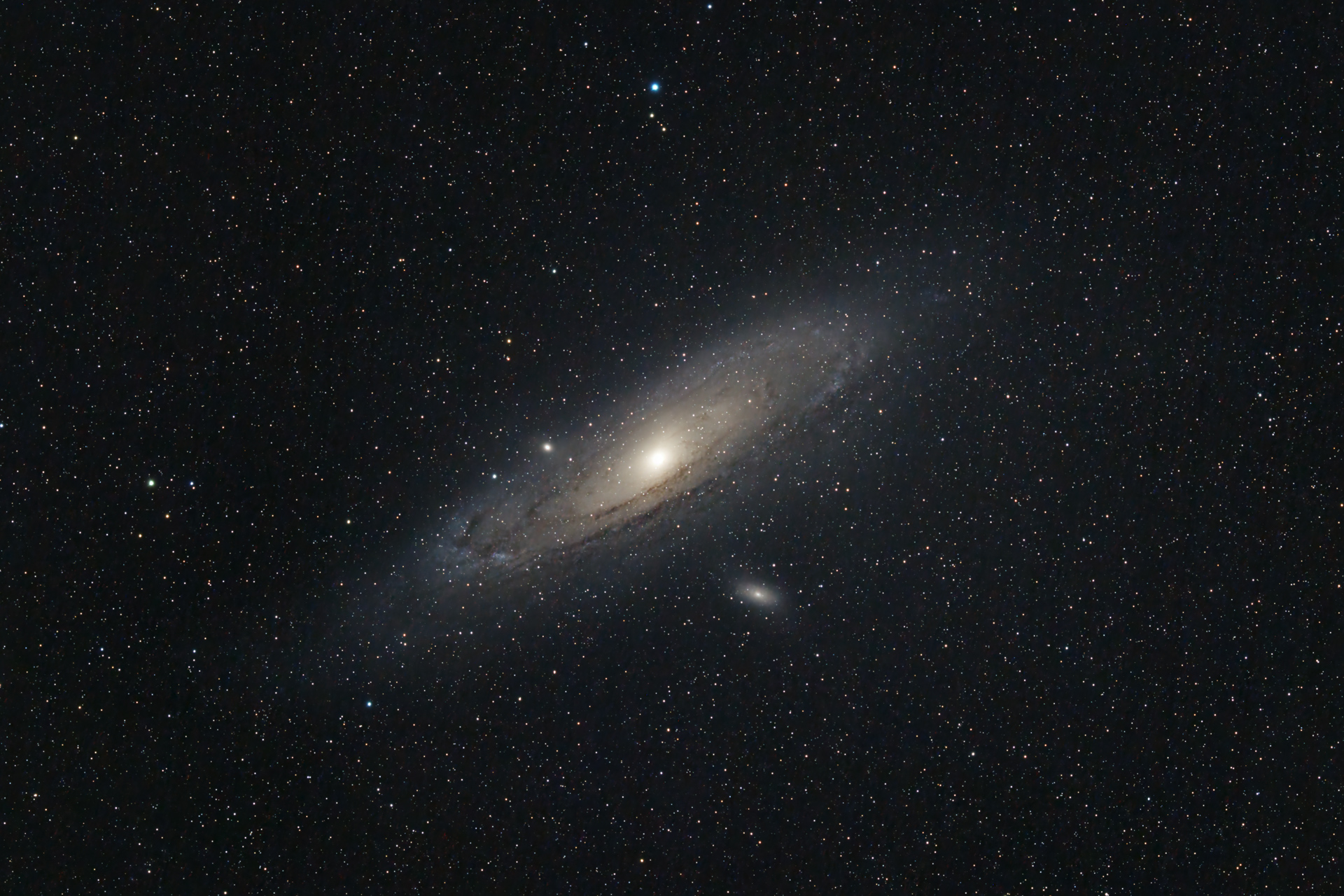
The Andromeda Galaxy (M31) is the closest major galaxy to our Milky Way and is one of the most distant objects that can be seen with the naked eye at 2.5 million light years away.
This is a must-shoot target for beginners; it is bright, large, and easily captured even under moderate light pollution.
This image was captured using the Samyang 135mm f/2 lens on an unmodified Canon 7D DSLR and Skywatcher Star Adventurer star tracker. Shot under rural Bortle 3–4 skies, so fairly dark.
This image highlights what’s possible with a fast lens and short integration time at a dark site— just 29 minutes total!
Image details
- Camera: Canon EOS 7D
- 29 x 1 minute exposures
- ISO: 1250
- Filters: None
- Stacked in DSS and processed in Pixinsight
The Sadr Region in Cygnus
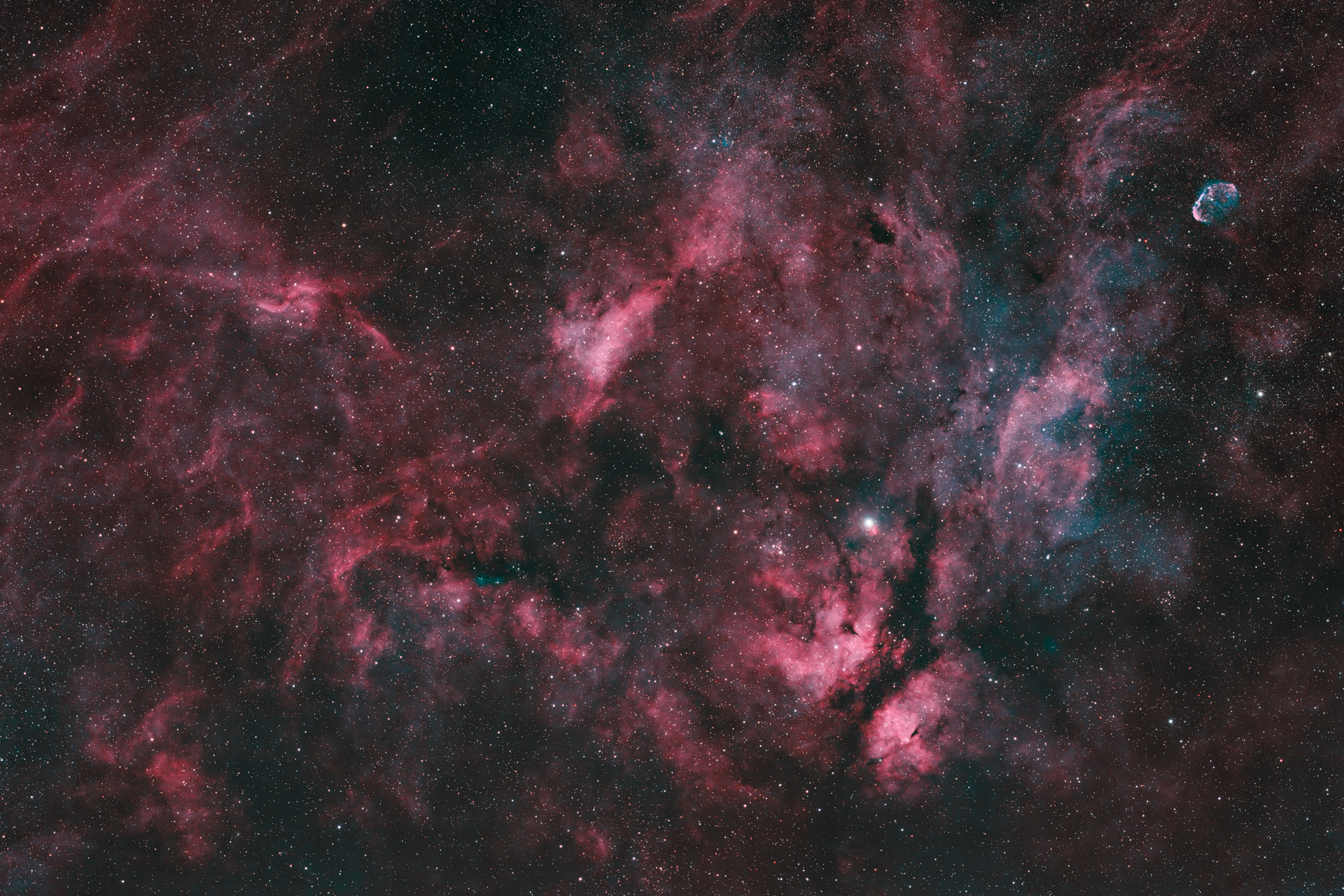
This two and a half hour integration showcases the dense emission nebulae near the star Sadr — the heart of the Cygnus constellation, one of the richest nebula regions in the northern summer sky, containing the Butterfly Nebula, Crescent Nebula and large diffuse hydrogen regions.
Shot with my portable astrophotography setup, this result shows how you can get some great images with simple gear and a fast lens.
Image details
- Camera: Canon EOS200D (astro-modified)
- 79 x 2-minute exposures (2hr 38min total)
- ISO: 1600
- Filters: Optolong LeNhance Clip-in Filter
- Stacked in DSS and processed in Pixinsight
- Bortle 5/6 skies
Veil Complex in Cygnus – The Complete Cygnus Loop
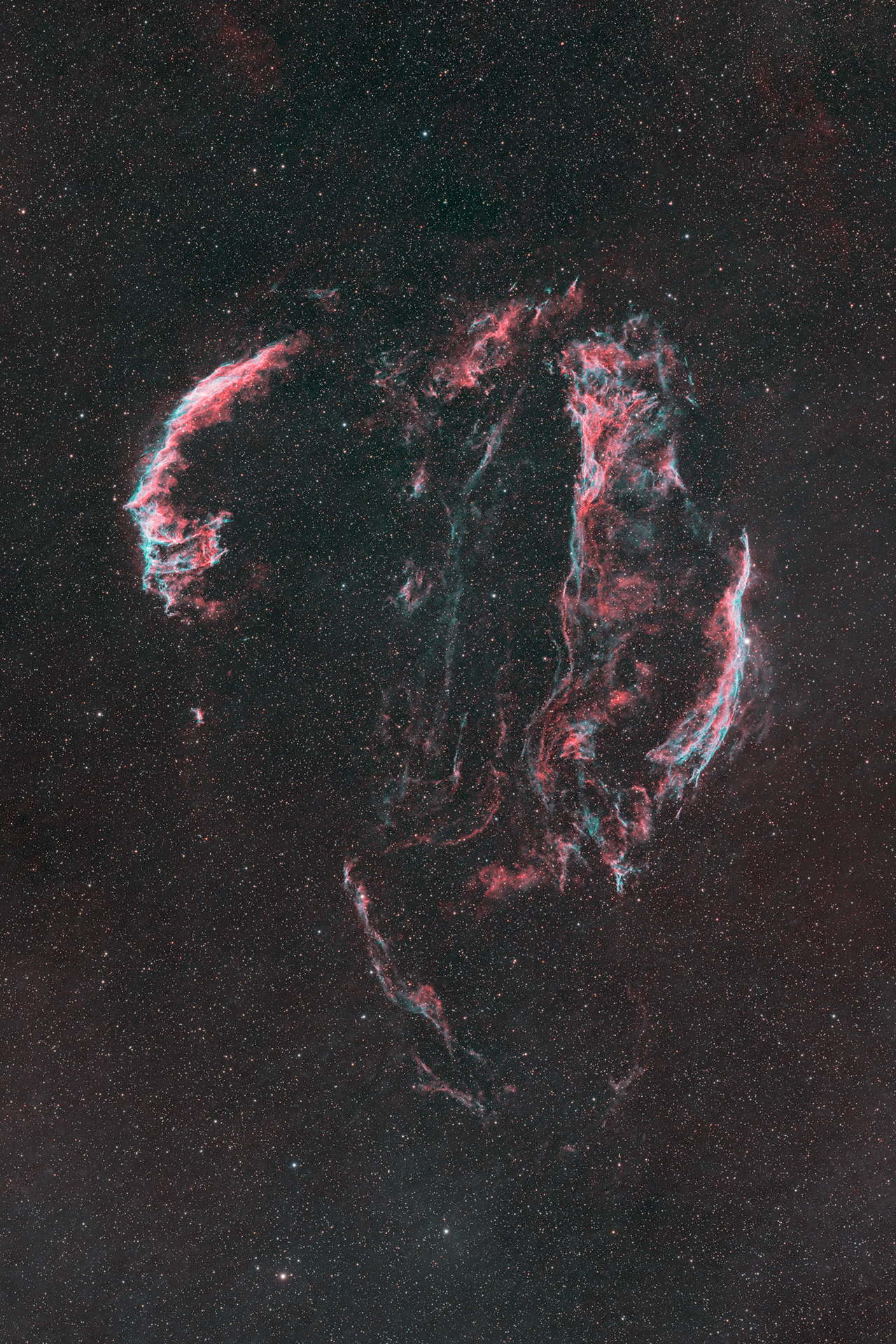
This image is a 6 hour 42 minute integration (134 x 180s subs) and reveals the full Cygnus Loop, which includes the Eastern Veil, Western Veil and Pickering’s Triangle Nebulae.
The Veil Nebula Complex is a vast supernova remnant spanning over 3 degrees of sky in the constellation Cygnus. What you’re seeing are the glowing shock fronts of a star that exploded just 10,000 to 20,000 years ago, very recent on cosmic timescales. At 135mm focal length, the Samyang lens can capture the entire structure in one field on an APS-C sized sensor.
For more information on this region and other nearby targets, check out my guide to the constellation Cygnus.
Image details
- Camera: Canon EOS200D (astro-modified)
- 134 x 3-minute exposures (6hr 42min total)
- ISO: 1600
- Filters: Optolong LeNhance Clip-in Filter
- Stacked in DSS and processed in Pixinsight
- Bortle 5/6 skies
Elephant’s Trunk Nebula in Cepheus
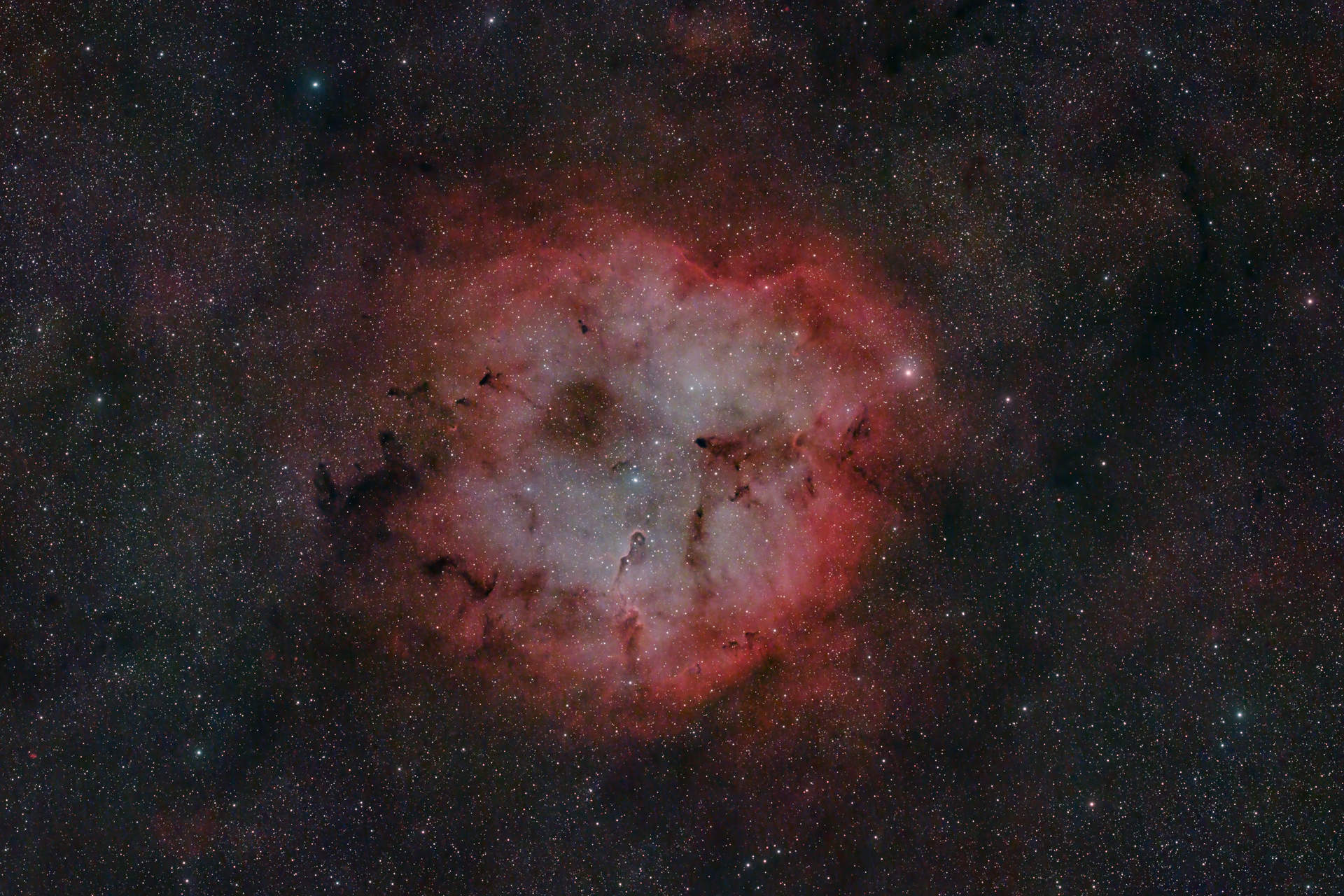
The Elephant’s Trunk Nebula (IC 1396A) is a dense, winding column of gas and dust that resembles an elephant’s trunk located within the larger emission region IC 1396 in the constellation Cepheus.
This image captures 6 hours and 54 minutes of exposure time (138 x 3-minute subs) using the Optolong L-eNhance clip-in filter, which isolates some of the key nebular emission wavelengths, including H-alpha and OIII.
Thanks to the wide field of view at 135mm, the full structure of the Elephant’s Trunk and surrounding nebula is captured cleanly in a single frame, showcasing both its dark, snaking dust lane and the rich hydrogen glow of its surroundings.
Image details
- Camera: Canon EOS200D (astro-modified)
- 138 x 3-minute exposures (6hr 54min total)
- ISO: 1600
- Filters: Optolong LeNhance Clip-in Filter
- Stacked in DSS and processed in Pixinsight
- Bortle 5/6 skies
Heart and Soul Nebula with the L-eNhance Filter
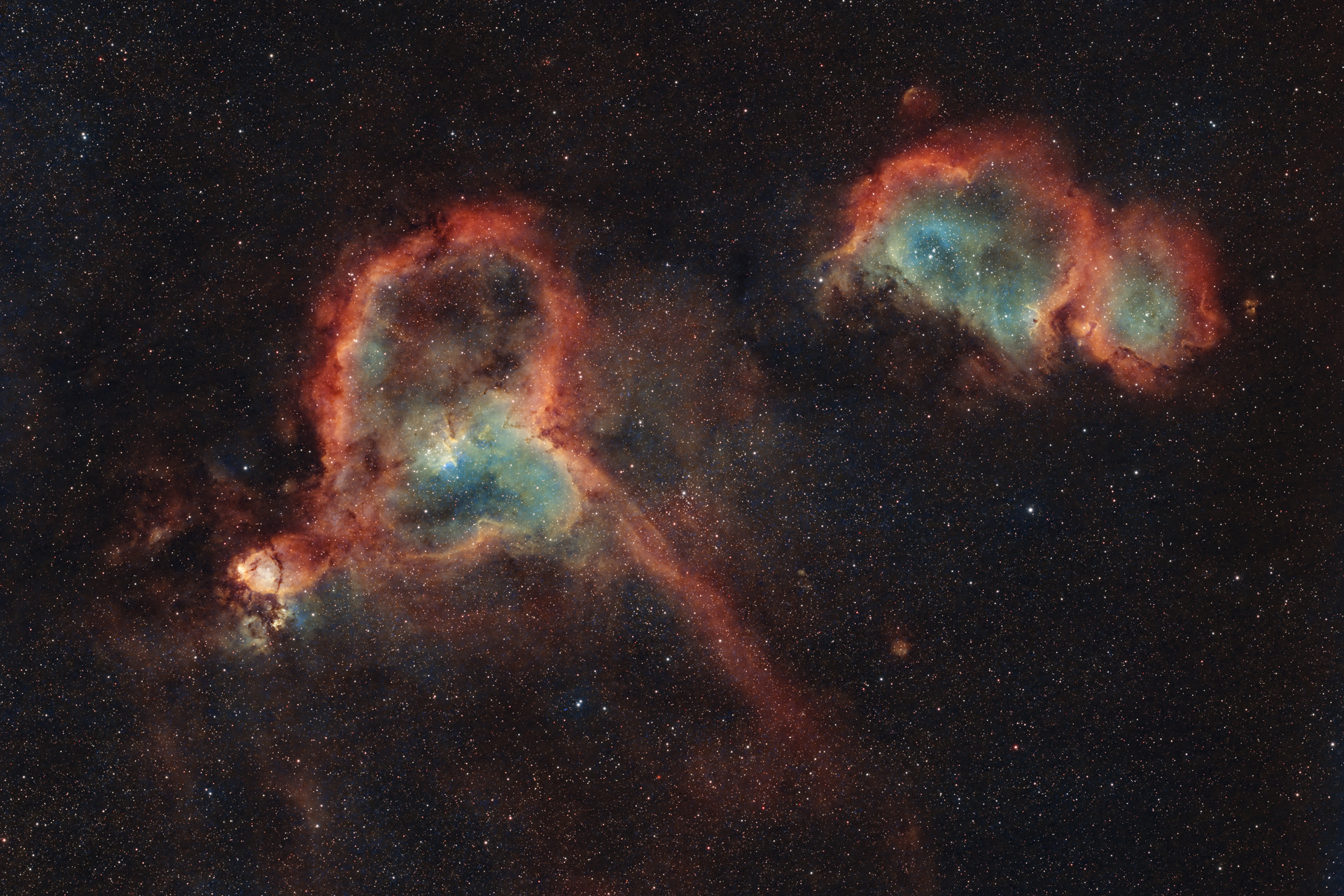
The Heart and Soul Nebulae are large emission nebulae in the constellation Cassiopeia. Both nebulae are often imaged together in widefield compositions due to their proximity.
This image was captured from Bortle 5/6 skies in the UK, using my astro-modded Canon 200D and an Optolong L-eNhance clip-in filter with a total exposure of 3 hours 16 minutes (98 x 2-minute).
When processing this image, I experimented with enhancing the cool blue OIII tones isolated by the L-eNhance filter, aiming for something closer to the classic Hubble SHO palette. While this approach isn’t ideal for one-shot colour cameras, especially DSLRs, I think the result is effective, with good detail and colour separation.
It’s a good example of what you can do from a light-polluted garden using a simple setup.
Image details
- Camera: Canon EOS200D (astro-modified)
- 98 x 2-minute exposures (3hr 16min total)
- ISO: 1600
- Filters: Optolong LeNhance Clip-in Filter
- Stacked in DSS and processed in Pixinsight
- Bortle 5/6 skies
Flaming Star and Tadpole Nebulae in Auriga
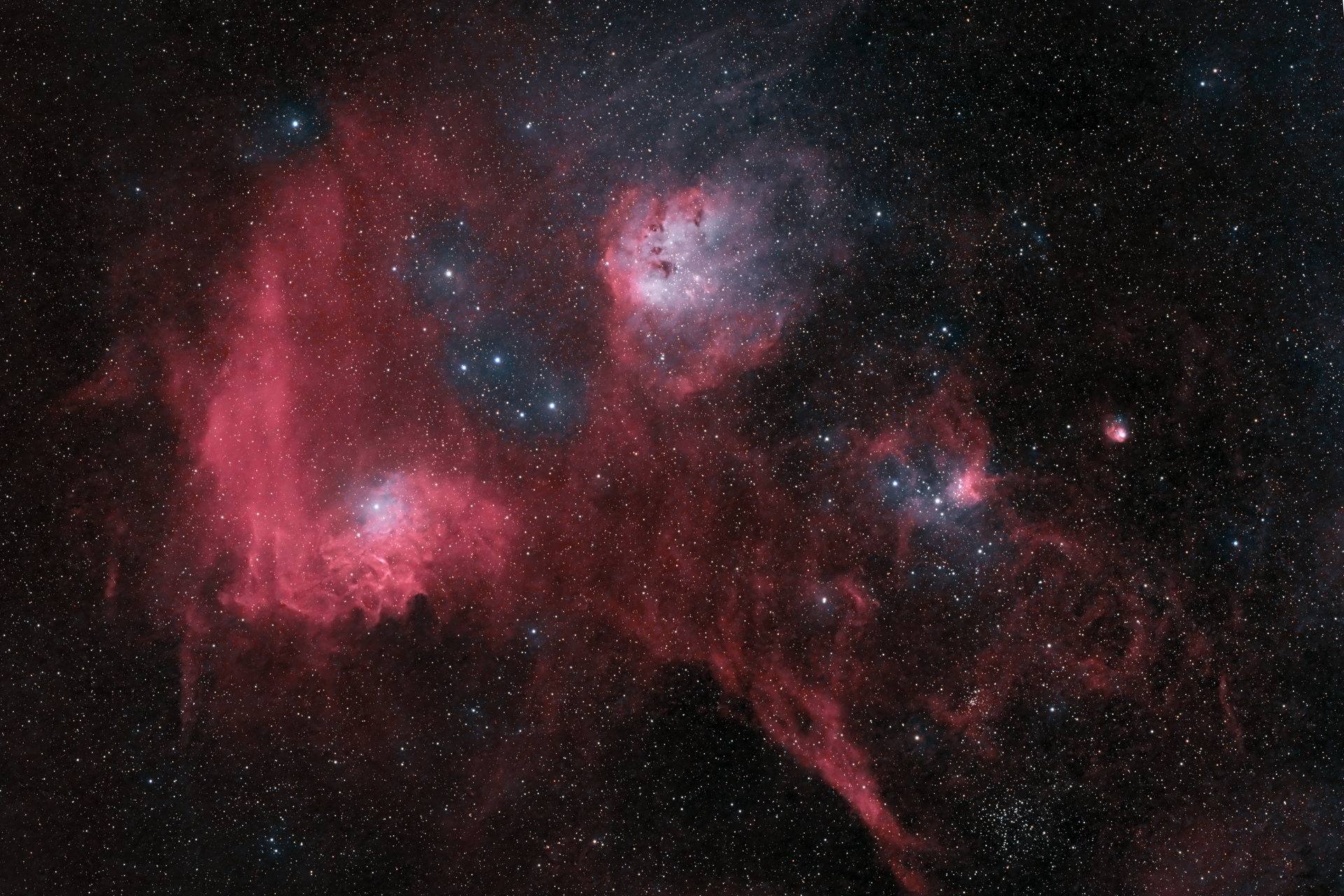
The Flaming Star Nebula (IC 405), along with the nearby IC 410 — often called the “Tadpole” Nebula — are bright emission and reflection nebulae located in the constellation Auriga.
Together, they form a rich and colourful region of ionised gas which is an excellent widefield target, and perfectly suited to the 135mm focal length of the Samyang f/2 lens, which captures both nebulae comfortably in a single frame.
This image was captured using a Canon 200D (astro-modified) and Samyang 135mm f/2 lens with the Optolong L-eNhance clip-in filter. A total of 2 hours and 22 minutes of exposure time was captured using a Sky-Watcher Star Adventurer.
Image Details
- Camera: Canon EOS200D (astro-modified)
- 71 x 2-minute exposures (2hr 22min total)
- ISO: 1600
- Filters: Optolong LeNhance Clip-in Filter
- Stacked in DSS and processed in Pixinsight
- Bortle 5/6 skies
0 Comments